
This summer, Ghana prepares for its fifth World Cup appearance, with global expectations once again hinting at brilliance. Yet beneath the optimism lies a growing disconnect between the idea of the Black Stars “shining” and their recent realities, marked by inconsistent performances and a lack of major continental success. So why does belief remain so strong? The answer may lie in how football memories are shaped, where past drama and excitement overshadow more recent struggles. Ghana’s World Cup story has always been about emotion, unpredictability, and spectacle, qualities that first captured the world’s imagination back in 2006 on football’s grandest stage in Germany.
2006: A Grand entry
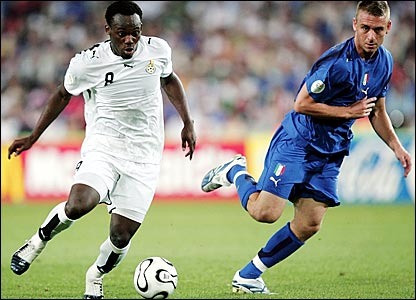
The Black Stars made their first appearance at the 2006 World Cup in Germany, under the guidance of manager Ratomir Dujković. In their debut against the then-three-time world champions, Italy, the scoreline hardly reflected the balance of play. Possession stood at 52% to Italy’s 48%, with 21 shots to Italy’s 18, eight on target to Italy’s 13, and 15 saves compared to Italy’s seven. Italy eventually won 2–0, but the performance proved Ghana belonged on the big stage.
If the Italy game was the appetiser, the clash with the Czech Republic was an unexpectedly delightful main course. Ranked second in the world at the time, the Czech side fell 2–0 to Ghana, then ranked 50th a true David and Goliath story. A 2–1 victory over the USA followed, before Ghana were eliminated by Brazil, the most decorated team in World Cup history. The Black Stars had arrived, and their announcement was loud.
2010: Heartbreak at the world stage
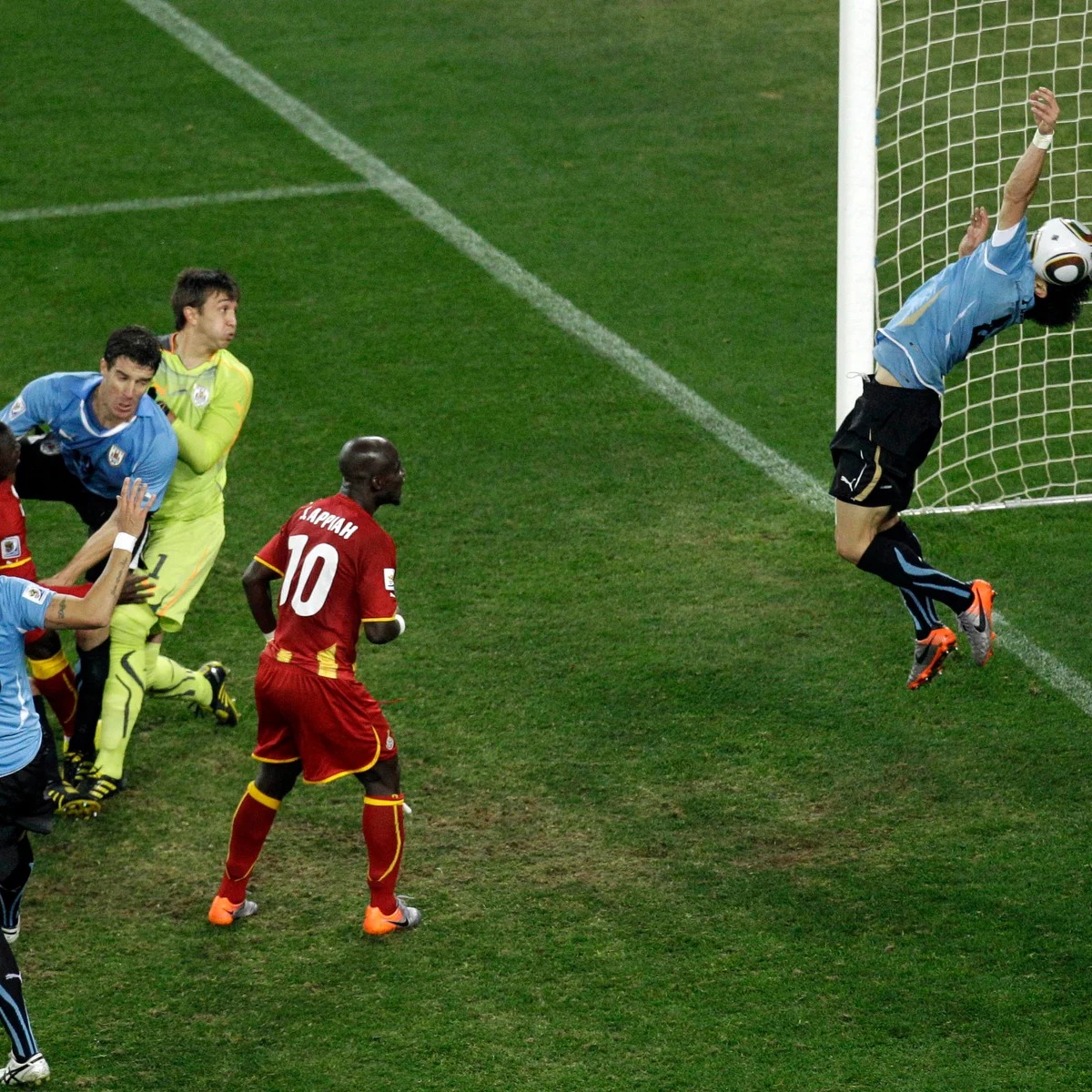
The South Africa World Cup in 2010 was the year Ghana attracted our biggest audience, and my God, Ghana delivered a storyline. A likeable African nation that sang upon arrival at the stadium and danced when they scored a goal. One that slowly built a platform on the world stage and fought as an underdog. It came very close, but in typical Black Stars fashion, a new character was written into the story. Let us not mention his name. He used illegal means to stop Ghana from progressing to become the first African team to play in a semi-final, with a handball. When Asamoah Gyan crashed the penalty against the crossbar in the last kick of the match, he celebrated with glee. This moment planted the seeds of indignation that would remain between the two football nations. A heartbreak was handed to Ghana. It was a defining chapter that still echoes in memory and rivalry today.
2014: Show me the money!!!
This is a World Cup that Ghanaian football fans would rather erase from memory. On the pitch, there was little to take away from the experience. Off the pitch, however, incidents unfolded that could fill an entire documentary.
Without exaggeration, the Football Association delayed appearance fee payments, leading players to threaten a strike and boycott their final game against Portugal until their fees were paid. The president of the country intervened and flew over three million dollars in cash to Brazil in June 2014 to appease the players. Scenes emerged of the money being delivered directly into the hands of the squad, with some even kissing the cash.
What followed this saga was a 2-1 defeat to Portugal, which resulted in elimination from the tournament. The Black Stars did not achieve their purpose, but they left behind unforgettable stories.
2022: Redemption & self-destruction
The build-up to the Qatar World Cup in 2022 filled the pages with another script. Ghana drew Uruguay in the group stage, and a new page was turned to continue the story after the dramatic exit in 2010. Ghana entered the grudge match with hopes of revenge after Suarez handled the ball on the line and was sent off, before celebrating Asamoah Gyan’s missed penalty.
Twelve years later, a few familiar figures remained. Luis Suarez, now nearing the end of his career, said he would not apologise and insisted Ghana missed their chance. The stage was set and the match delivered. Ghana won a penalty after Mohamed Kudus was fouled by Sergio Rochet. Andre Ayew failed to score, and it proved costly.
Despite talk of revenge, Uruguay won 2-0. Yet Suarez, in tears after Uruguay’s exit, offered a moment of satisfaction for many Ghanaians.
2026: Fired at the front door
With the World Cup a month away, the obvious apprehension from Ghanaian football fans will begin to set in. Looking at the history and pedigree of Ghana at the World Cup, it is not surprising that fans feel this way. If football was a story or a film, the Black Stars would be among the best writers. They tend to fully entertain neutral fans. However, the very thing that entertains neutrals is rarely comforting for those at home.
There is a reason why we all love drama. It brings unpredictability, and the Black Stars deliver that very well. For that reason, the global football audience is always tuned in. What the local fan desires is comfort and success, but what feels like comfort and success to a neutral fan can be dull. Even before the opening ceremony and the theatrics in North America, with the USA, Mexico, and Canada, the stage is already set for another chapter in the epic story of the World Cup.
Following the sacking of coach Otto Addo just 72 days before the start of the 2026 FIFA World Cup, many will expect this summer’s spectacle to unfold within the Black Stars camp. As usual, expectations are high, and so is the unpredictability. With a new head coach, Carlos Quieroz in the directing seat, it’s time to grab your drinks, your popcorn, and remain seated, because one of the best storywriters in football is about to turn a fresh new page.